The Body of Christ, Crucified…

Church is important to me, and at least until my health became poor several years ago, I was very involved in ministry within it. Lately, however, I’ve been discovering I feel pretty apathetic towards it. I still love to worship in it, to raise my voice in song and take communion with others, to listen to messages that dig deep into the Word. To be quite honest, though, there’s something about it that can be so exhausting. The people who inhabit churches can be so broken, as we all can be. On the flip side, I’ve also been the recipient of generosity, grace and lots more love than I could ever deserve from people within churches. I’m not meaning to throw punches, and certainly have no right to cast stones; I know I can’t remain in apathy or disconnection, and that my eyes should be on God alone. It seems, however, that if there’s something to this whole faith thing, and I know that I know that there is, there should be something different about church.


I remember reading somewhere years ago, though I’m not sure of the source, an explanation of church that has helped me in accepting this, or at least it made it all so much more comprehensible. It explained that the Body of Christ, the Church, is still the broken body of Christ. Though often filled with wonderful and well-intentioned people, and inhabited by the Holy Spirit, the Church will not be the resurrected and perfected Body of Christ until the day our Savior returns. One day, we too, shall be like Him; for now, we are all still being sanctified. Sometimes, as when the church welcomes all into its doors and steps out into communities and preaches with actions and not just words, reaches out its hands to help those in need, we are like Him even now. Others, we are broken and bleeding and wounded…but still, the blood flows down from the Savior who died to bring all men to Him. As the band Casting Crowns said in their song “If We Are the Body”, may we continue striving to be His arms reaching, His hands healing, His words teaching, His feet going, His love showing [the world] there is a way.


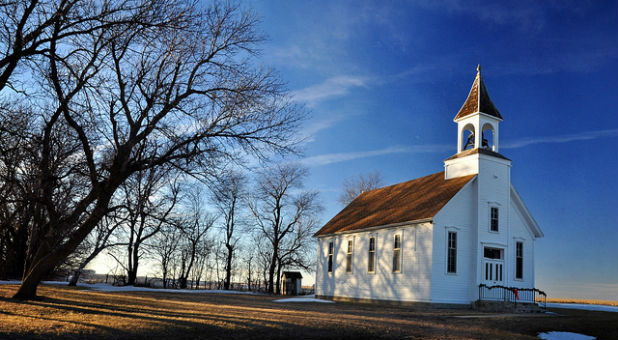
Photo Credits, & an Interesting Article: http://www.charismanews.com/us/53715-study-thousands-of-churches-closing-every-year-but-there-is-a-silver-lining

“But Even If You Don’t…”

An inspiring story I’ve loved since childhood is that of the three Jewish boys, Shadrach, Meshach & Abednego, who accompanied Daniel to the palace of the Babylonian king, Nebuchadnezzar. True to the prophecy of Jeremiah, God had allowed Babylon to lay siege to Jerusalem, and though a remnant remained, the majority of the Israelites were living in Babylon and exile. These four young boys, exemplifying the best of the tribes of Israel, modeled living faithful to God, despite their captivity. When they refused to worship the image of gold cast and commanded by Nebuchadnezzar, they were condemned to death, and thrown into a fiery furnace. They remained unburned and walked out alive. Their miraculous rescue, and the appearance of a fourth man in the furnace with them, is one of the great stories of scripture.


My favorite part, however, is their unwavering trust in the sovereignty of God, whether or not He did as they wanted. In Daniel 3:16-18, they respond to the king with this statement: “O Nebuchadnezzar, we do not need to defend ourselves before you in this matter. If we are thrown into the blazing furnace, the God we serve is able to save us from it, and he will rescue us from your hand O king. But even if he does not, we want you to know, O king, that we will not serve your gods or worship the image of gold you have set up.”


I want God to heal me, to provide for me, to work miracles in my life…and I pray for faith to believe in Him for all this. But…even if…He does not…I still want to trust Him. I do trust Him. Mercy Me recently published a song called “Even If” that tells this story and proclaims this same largeness of faith and trust:


“It’s easy to sing

When there’s nothing to bring me down

But what will I say

When I’m held to the flame

Like I am right now

I know You’re able and I know You can

Save through the fire with Your mighty hand

But even if You don’t

My hope is You alone

They say it only takes a little faith

To move a mountain

Well good thing

A little faith is all I have, right now

But God, when You choose

To leave mountains unmovable

Oh give me the strength to be able to sing

It is well with my soul”

“IF”…

It’s funny how many of us are shocked when our lives don’t turn out as we expected, when most of us have been told from the beginning that’s how it would be. It’s almost as if we receive the warning as a challenge, clinging tenaciously to the belief our individual stories will be different from those of all others who have come before us. It seems we’re lucky if we begin life with this belief in the uniqueness of our journeys, but die knowing we’ve been proved wrong, with the certainty our stories are just a part of the greater human story told over and over again. When we’re young, we need to be powerful in our resilient hope; when we’re old, we have an even greater need to share a sense of connection and humanity.


If someone had told me, I’d probably still have had to learn it for myself. It’s a lesson I still learn over and over again, despite experience, and knowledge it shapes. Expectations are like cobwebs: even when we think we’ve shaken free, often, we later find them hanging on by a thread in some hidden and unexpected place.


In his resonant poem “IF”, Rudyard Kipling offers great observations for how to keep our heads in a world that rarely matched our expectations. These have inspired me time and time again, offering perspective and shifting paradigms:


If you can keep your head when all about you   

Are losing theirs and blaming it on you,   

If you can trust yourself when all men doubt you,

But make allowance for their doubting too;   

If you can wait and not be tired by waiting,

Or being lied about, don’t deal in lies,

Or being hated, don’t give way to hating,

And yet don’t look too good, nor talk too wise:

If you can dream—and not make dreams your master;   

If you can think—and not make thoughts your aim;   

If you can meet with Triumph and Disaster

And treat those two impostors just the same;   

If you can bear to hear the truth you’ve spoken

Twisted by knaves to make a trap for fools,

Or watch the things you gave your life to, broken,

And stoop and build ’em up with worn-out tools:

If you can make one heap of all your winnings

And risk it on one turn of pitch-and-toss,

And lose, and start again at your beginnings

And never breathe a word about your loss;

If you can force your heart and nerve and sinew

To serve your turn long after they are gone,   

And so hold on when there is nothing in you

Except the Will which says to them: ‘Hold on!’

If you can talk with crowds and keep your virtue,   

Or walk with Kings—nor lose the common touch,

If neither foes nor loving friends can hurt you,

If all men count with you, but none too much;

If you can fill the unforgiving minute

With sixty seconds’ worth of distance run,   

Yours is the Earth and everything that’s in it,   

And—which is more—you’ll be a Man, my son!

“Jesus, I Am Resting”…

”Jesus, I am resting, in the joy of what Thou art. I am finding out the measure of Thy loving heart. Thou hast bid’st me gaze upon Thee, and Thy beauty fills my soul, for by Thy transforming power, Thou hast made me whole” (Pigott, Jean; “Jesus, I Am Resting”). This is the first chorus of the famed nineteenth century missionary to China, & founder of the transformative China Inland Mission group,  Hudson Taylor. In the face of grief, after losing his beloved wife, having long suffered heavy criticism and isolation, he wrote to his sister in England that these words were his greatest source of comfort. How difficult it is to be still and to rest in the sovereignty and presence of God, when He has allowed the one you most love to leave your side.


I’ve recently made a very personal, and yet public, decision to leave a ten-year career as a public school teacher because of my health. In so doing, I gave up any hope that my life could be easily understood by others looking in from the outside. I’ve been so blessed that there are many family and friends who understand or empathize the intensity of the process I am in, and who have offered me shelter and respite. It feels a bit like I’ve taken a giant leap off a cliff, and mercifully landed on a spacious precipice, but with the vast unknown still before me. I can’t see the next steps, the future is still completely unknown, and yet…it is here, in this place, today, that I must learn to rest. Deuteronomy 33:27 says, “The eternal God is your refuge, and underneath are the everlasting arms.” They seem to echo the following verses of this great hymn, and prompt me to fix my gaze on God alone:


“Simply trusting Thee Lord Jesus, I behold Thee as Thou art,

and Thy love, so pure, so changeless, satisfies my heart.

Satisfies its every longing, meets, supplies, its every need.

Compasseth me round with blessings, Thine is love indeed.

Ever fix my gaze upon Thee, as I work and watch for Thee.

Resting ‘neath Thy smile Lord Jesus, earth’s dark shadows flee.

Sunshine of my Father’s glory, brightness of my Father’s face.

Keep my ever resting, trusting, Fill me with Thy grace.”

“Prepare to Be Surprised”…

In the movie Dan In Real Life, Dan is a dad considering what to say to his daughter as she graduates from high school & heads out into the world. As he does so, he starts to examine his own life, & how often it surprised him, or failed to meet any of his expectations.  So, why is it that we’re always asking graduates what their “plans” are? Why do we try so hard to prepare for what’s coming, when in reality, we know there is no adequate preparation? Whatever happens will probably come as pretty much…a total surprise.  While plans & dreams can be great things, our expectations of what we think our lives are supposed to look like so often constrain & disappoint us. We often hold these visions so firmly, & cling so tightly, that it makes it difficult for our hands to be open to other great things God has intended for us.


Corrie Ten Boom, survivor of the Holocaust & author of The Hiding Place, said it this way: “I’ve learned to hold things loosely.  I don’t like it when He has to pry them from my grip.”  Living a surrendered life is not easy, but it IS what God call us to do, & it must be done over & over again.  In his Superpower Poem, Steve Gross states: “Openness to what is can take us far. Suffering is rooted in wanting things to be different than the way they are.”  How true this is, & how grand it would be if we could live each day as small children: open to whatever the day brings, playful & joyful in the opportunities that come, ready for adventure…all simply because they’re trusting in the good things they know their parents have prepared. “It isn’t that I cling to Him, or struggle to be blessed. He simply takes my hand in His, & there I let it rest. So I dread not any pathway, dare to sail on any sea, since the handclasp of my savior makes the journey safe for me” (unknown). It’s safe, we can trust Him…so let’s consider willingly surrendering our expectations to our Lord, & live prepared…to be surprised.

Irony of Christianity…

In the movie Becoming Jane, the character of Jane Austen offers a wonderful definition of irony: “…the bringing together of two contradictory truths, but always done with a smile”. As an author, Austen is most praised for her astute observations and understanding of human character. The ability to understand the complexity of human nature must take irony into account. It is an incontestable component of life. We all have some  experience with navigating its paradoxes. Those of us who find happiness have learned to do it with a smile.

 
This definition of irony calls to mind many things for me, but foremost among them is Christianity. We are saved sinners; we’ve been made right with God, but live out our sanctification; God’s power is made perfect in our weakness (II Corinthians 12:9); we walk in faith, and yet by sight. The season of Advent is described as “the already, and the not yet”. Jesus, our Messiah, lived a life where He was fully human, yet fully divine. The apostle Paul described the irony of the Christian life in his second letter to the young Corinthian church: “…we are hard-pressed on every side, but not crushed, perplexed, but don’t despair; persecuted, but not abandoned; struck down, but not destroyed….having nothing, and yet, possessing everything” (II Corinthians 4:8-10). Paul cuts to the core of the irony of Christianity in that same letter: “We have this treasure in jars of clay to show that this all surpassing power is from God, and not from us….Therefore we do not lose heart: Though outwards we are wasting away, yet inwardly we are being renewed day by day” (II Corinthians 4:7, 16). The irony of Christianity is a God who continually offers Himself to fill the needs of humanity, through broken humanity itself.