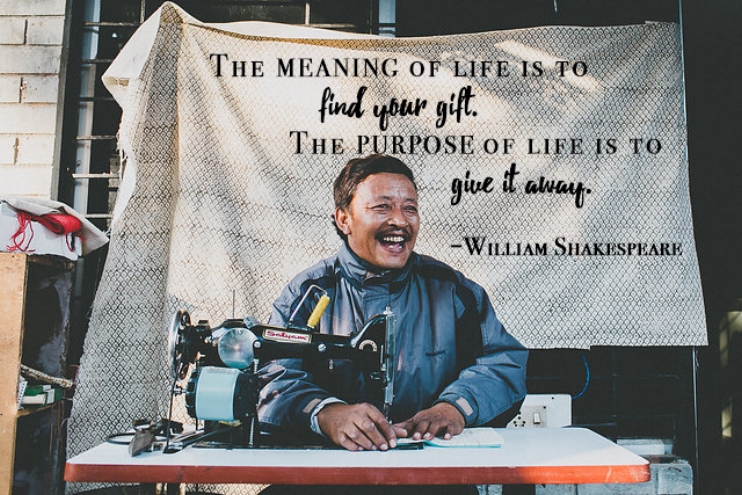
“The Wonder of It All”…

A dear friend once gave me a card that said “Never lose your sense of wonder.” Coming from her, this encouragement carries great weight for me; it becomes an inspiration because it reflects a life grounded in both reality and wonder. Though nearing retirement and a veteran of more than her fair share of life’s challenges, she’s never lost her curiosity and amazement with life and the Lord. I came to know her as my mentor and friend when I moved to the town where I began my first long-term teaching job. She taught high school, and helped me learn to do the same. Her contagious vivacity and wit, as well as natural way of connecting and empathizing with youth, make people assume she’s twenty years younger than she actually is. She always downplays her own role in this, claiming that teaching keeps us young. Indeed, I have found this to be true, but most especially so when we as teachers are willing to be affected by all those we teach. She’s ever-willing, and because she is, her life in turn, has profoundly affected those of the students she taught.
Though we no longer teach together, I still consider her my mentor. As a teacher and a person, she is a force as awesome and resilient as nature herself. There are powerful influences in her life that have often attempted to determine and shape her reality, but she has staunchly refused to acquiesce.  Though at times her circumstances have seemed challenging, she faithfully cultivates joy one day at a time, continuously searches for reasons to laugh, walks determinedly in faith and not by sight, and pursues connections that pull her into spheres of positivity. I’ve known her almost ten years now, and in that time, she’s adopted me, welcoming me into her home and family as if I were a second daughter. When I became sick with a chronic illness, she cared for me. She has seen and understood me at the times where it seemed like few others could. She has refused to let me give up or give in to negativity, most effectively by her own example. Edith Wharton, the first woman to win the Pulitzer Prize for Literature, once said something that seems to purposefully describe my friend: “One can remain alive  long past the usual date of expiration, if one is unafraid of change, happy in small ways, insatiable in intellectual curiosity, and interested in big things.” My wonderful friend has lived in such a way, and therefore, remains not just alive, but ALIVE.  In other words, my friend lives out God’s granting of another’s request: “I do not ask to know the reason for it all; I ask only, to know the wonder of it all” (Heschel, Abraham). May we all be continually captivated by the wonder of it all.

Standing on the Promises…

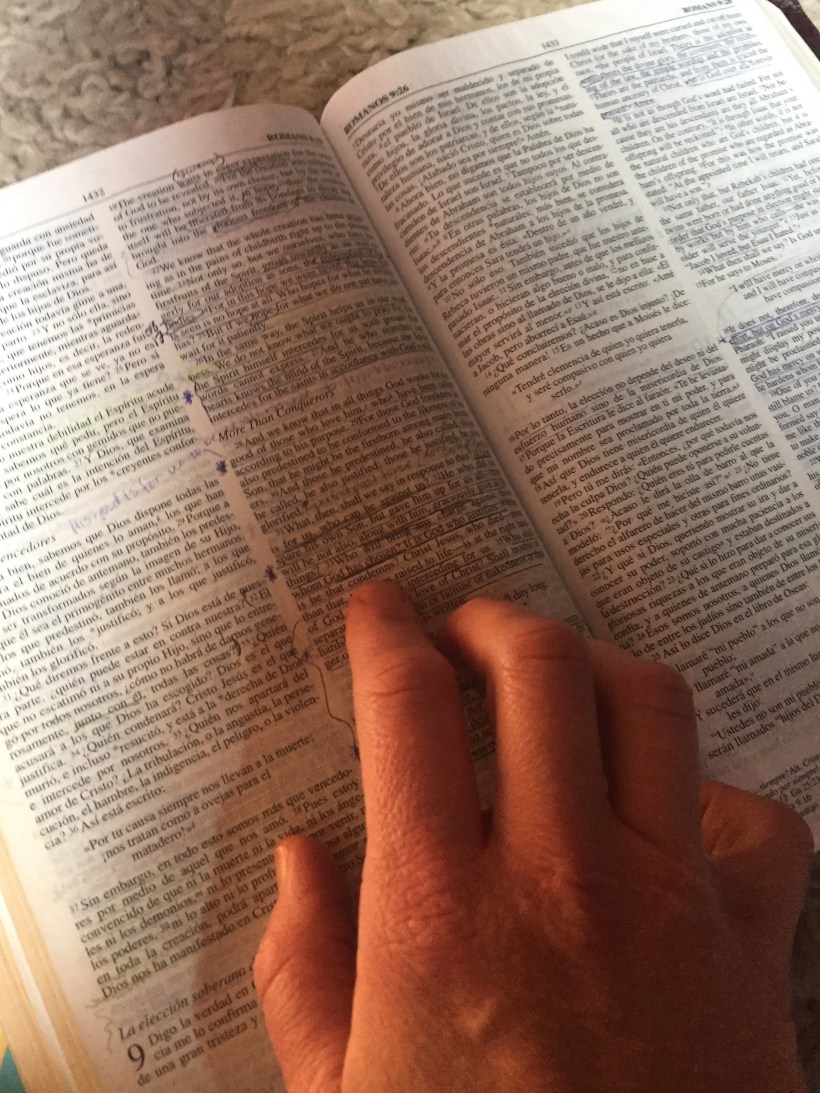
I’ve said this liturgy of promises to myself over & over again, most often in times of great anxiety or distress. Almost fifteen years ago, in such a time, God reminded me that I could rest assured in any situation by claiming His Word. Psalm 94:19 says: “When anxiety was great within me, your consolation, O LORD, brought joy to my soul”. As I poured out my heart to Him that evening, it was as if He began to assure me of the unfailing promises I could always hold. I found myself listing them off on my fingers, finishing with exactly enough for two full handfuls. I call them my “Finger Promises”:


    1. God is w/ me, & will always be with me. (Isaiah 41:10, 43:2; Zephaniah 3:17)
    2. God loves me, & will always love me. (Psalm 136, Jeremiah 31:3, Romans 8:35-38)
    3. God is at work in my life, & He will always be at work in my life. (Psalm 121:7, Philippians 1:4, II Corinthians 2:14)
    4. God is in control, & I am not, for He is God, & I am not. (Psalm 135:6, Romans 8:27)
    5. No matter how circumstances appear, He is always at work for my good & His glory. (Isaiah 48:9, Romans 8:28-32, II Corinthians 9:8)
    6. He desires to give me the desires of my heart. (Psalm 16:11, Psalm 37:4)
    7. He has plans to prosper me, & not to harm me, to give me a future & a hope. (Jer. 29:11, Lamentations 3:31-33)
    8. God will not allow me to be tempted beyond what I can bear, & always lends me His strength. (I Corinthians 10:13, II Corinthians 12:9)
    9. The Lord’s timing & plan for my life are perfect. (Psalm 138:8, Isaiah 46:10)
    10. His love for me is perfect. (Isaiah 49:15-16, Romans 8:32, Galatians 4:7, I John 3:1,16)

 
The mere fact that I’ve never struggled to remember this list, and that each promise seems as clear to me now as it was the night they were given, seems to me a sign that God Himself wrote them on my heart. As I’ve searched the Scripture since, I’ve found multiple verses to support every single one. They assure my heart in each and every situation I face. No matter what, I’ll be okay. He hasn’t forgotten me, He never will. His love will always sustain me. His hand will never stop shaping my life to His purposes. Because of these promises I can stand and say with confidence: “I am not afraid of storms, for I am learning to sail my ship” (Louisa May Alcott). Let us continually take His promises up in our hands and hold them close, let us stand upon them as a sure foundation. He is always enough to satisfy our souls and fill our lives to overflowing.

Irony of Christianity…

In the movie Becoming Jane, the character of Jane Austen offers a wonderful definition of irony: “…the bringing together of two contradictory truths, but always done with a smile”. As an author, Austen is most praised for her astute observations and understanding of human character. The ability to understand the complexity of human nature must take irony into account. It is an incontestable component of life. We all have some  experience with navigating its paradoxes. Those of us who find happiness have learned to do it with a smile.

 
This definition of irony calls to mind many things for me, but foremost among them is Christianity. We are saved sinners; we’ve been made right with God, but live out our sanctification; God’s power is made perfect in our weakness (II Corinthians 12:9); we walk in faith, and yet by sight. The season of Advent is described as “the already, and the not yet”. Jesus, our Messiah, lived a life where He was fully human, yet fully divine. The apostle Paul described the irony of the Christian life in his second letter to the young Corinthian church: “…we are hard-pressed on every side, but not crushed, perplexed, but don’t despair; persecuted, but not abandoned; struck down, but not destroyed….having nothing, and yet, possessing everything” (II Corinthians 4:8-10). Paul cuts to the core of the irony of Christianity in that same letter: “We have this treasure in jars of clay to show that this all surpassing power is from God, and not from us….Therefore we do not lose heart: Though outwards we are wasting away, yet inwardly we are being renewed day by day” (II Corinthians 4:7, 16). The irony of Christianity is a God who continually offers Himself to fill the needs of humanity, through broken humanity itself.