

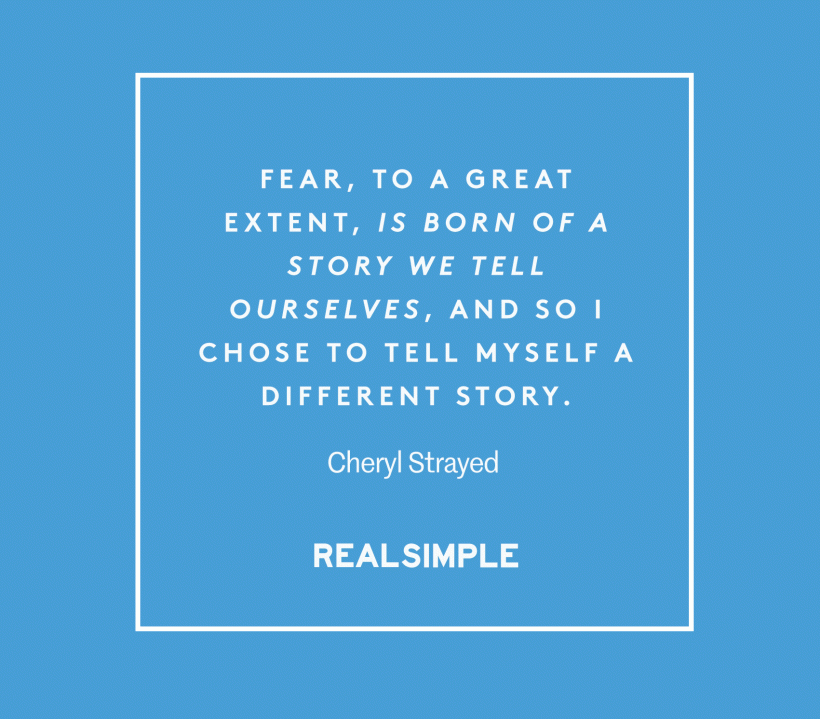
It’s funny how many of us are shocked when our lives don’t turn out as we expected, when most of us have been told from the beginning that’s how it would be. It’s almost as if we receive the warning as a challenge, clinging tenaciously to the belief our individual stories will be different from those of all others who have come before us. It seems we’re lucky if we begin life with this belief in the uniqueness of our journeys, but die knowing we’ve been proved wrong, with the certainty our stories are just a part of the greater human story told over and over again. When we’re young, we need to be powerful in our resilient hope; when we’re old, we have an even greater need to share a sense of connection and humanity.
If someone had told me, I’d probably still have had to learn it for myself. It’s a lesson I still learn over and over again, despite experience, and knowledge it shapes. Expectations are like cobwebs: even when we think we’ve shaken free, often, we later find them hanging on by a thread in some hidden and unexpected place.
In his resonant poem “IF”, Rudyard Kipling offers great observations for how to keep our heads in a world that rarely matched our expectations. These have inspired me time and time again, offering perspective and shifting paradigms:
If you can keep your head when all about you
Are losing theirs and blaming it on you,
If you can trust yourself when all men doubt you,
But make allowance for their doubting too;
If you can wait and not be tired by waiting,
Or being lied about, don’t deal in lies,
Or being hated, don’t give way to hating,
And yet don’t look too good, nor talk too wise:
If you can dream—and not make dreams your master;
If you can think—and not make thoughts your aim;
If you can meet with Triumph and Disaster
And treat those two impostors just the same;
If you can bear to hear the truth you’ve spoken
Twisted by knaves to make a trap for fools,
Or watch the things you gave your life to, broken,
And stoop and build ’em up with worn-out tools:
If you can make one heap of all your winnings
And risk it on one turn of pitch-and-toss,
And lose, and start again at your beginnings
And never breathe a word about your loss;
If you can force your heart and nerve and sinew
To serve your turn long after they are gone,
And so hold on when there is nothing in you
Except the Will which says to them: ‘Hold on!’
If you can talk with crowds and keep your virtue,
Or walk with Kings—nor lose the common touch,
If neither foes nor loving friends can hurt you,
If all men count with you, but none too much;
If you can fill the unforgiving minute
With sixty seconds’ worth of distance run,
Yours is the Earth and everything that’s in it,
And—which is more—you’ll be a Man, my son!



 SparrowSong