Anchored in the His Harvest…

A friend of mine was once  given a vision and a strong mental picture of harvesting. She saw a girl walking through a corn field, ripe for harvest. As the girl walked, the storm winds blew & endangered all that had grown. As she faced the storm, she carried a large anchor, & began to cast it against the wind, into the harvest field. Again & again, as the storms buffeted all that had been produced by hard labor & careful care, the girl made this choice. Again & again, she threw her anchor into the harvest.


It reminds me of Bebo Norman’s song entitled “All That I Have Sown”, which describes what ultimately comes of each of our lives:


And all that grows is our story told

As life unfolds here before

The peace we found in that broken ground

I can see them in the harvest…of all that I have sown

And when my life is done

I pray the kingdom come

And take me to Glory

It’s living inside me

It was planted like a seed

All to tell a story
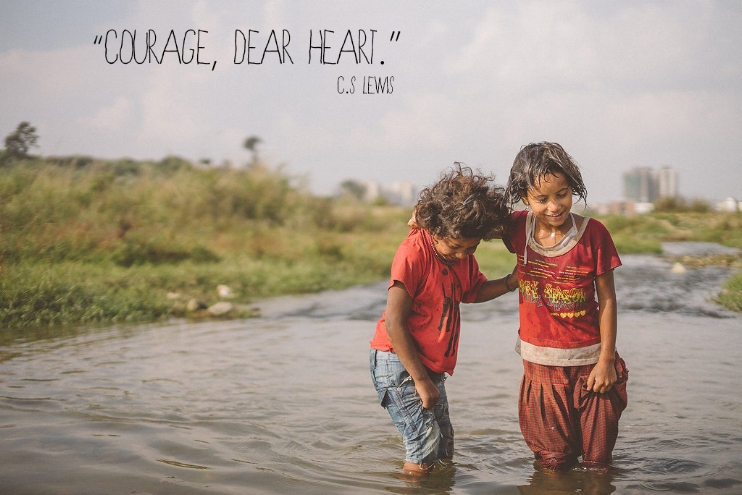
It’s “all to tell a story”. The tasks given to each of us may require a hard, committed constant endeavor, and at times, can feel very lonely. We must encourage each other to take heart, and together, courageously cast out our anchors over and over again. Matthew tells us that Jesus said, “The harvest is plentiful, but the workers are few. Pray therefore that the Lord will send out workers into His harvest field.” Even prayer may feel like a long labor, and trusting the season of harvest awaits us may require immense faith; we are only capable of this great work as we are filled with God’s strength. As we anchor ourselves in a harvest that is most often unseen, truly, we anchor ourselves in Him. In Him is “all our hope & stay” (On Christ the Solid Rock I Stand).

“O Joy that Seekest Me Through Pain” (George Matheson)-

One of my favorite sights in Barcelona is the artist Antoni Gaudi’s Parque Güell, where mosaic tiles cover the longest bench in the world. There’s something so beautiful about mosaics, isn’t there? They strike something within us not only for the picture they create with complementary colors, but also for the stunning revelation of patterns and colors one wouldn’t think of as naturally belonging together. They are all simply pieces of vessels and structures that have been broken and neglected, whose original purpose seemed to lie torn in worn-out pieces. They highlight the beauty of fractured things coming together to create something new, something unexpected. When this happen in my life, as in this present season of reinvention, the new and ultimate picture being made by God is often a mystery. C.S. Lewis spoke of God as being the master artist in our lives:

“Remember He is the artist and you are only the picture. You can’t see it. So quietly submit to be painted—i.e., keep fulfilling all the obvious duties of your station (you really know quite well enough what they are!), asking forgiveness for each failure and then leaving it alone. You are in the right way. Walk—don’t keep on looking at it.”

When I do catch a glimpse of God’s vision for what seemed fragmented and lost, it often takes my breath away. Submitting to His artistry, and to this mystery, ultimately seems to bring a surprising joy that can’t be ignored. Pastor and hymn writer George Matheson spoke of this too:

“O joy that seekest me through pain,

I dare not close my heart to thee.

I trace the rainbow through the rain,

And know the promise is not vain,

That morn shall tearless be.”

The Apostle Paul’s encouragement in Romans 8:28 is so comforting: “And we know in all things, God works for the good of those who love Him, of those who are called according to His purpose”. One day will see the grand design: “Then I will know, even as [we] are fully known” (I Corinthians 13:12). That day will not only hold the revealing of His artistic design, it will be the completion of all our joyous victories, manifested in all their fullness.

The Song of the Meadowlark & The Coming of Spring…

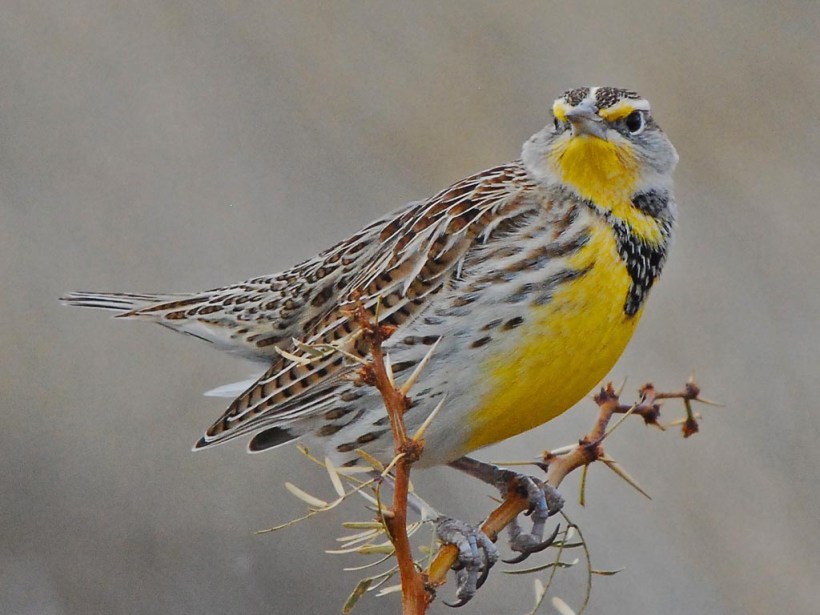
In Colorado, it’s definitely hard to predict when spring has actually arrived. Skies are typically as consistently gray as ever are, and spring blizzards and dust storms frequent. It’s mid-April now, and for a couple weeks, I’ve been hearing the song of the meadowlark, my favorite of all birds. There’s something about this bird’s song in particular that signifies the arrival of spring here. Now the daffodils are blooming, and I’m sure that spring is on the way. Oh, how wondrous it always is. Sometimes in the fall, I almost welcome the shorter days and quieter season, bringing with them a chance to turn inward. Despite holding a definite appreciation for each season, however, it does seem winter always leaves its mark. The coming of spring is always so welcome. Margaret Manning, an author and speaker for Ravi Zacharias ministries, reflects on the arrival of spring and Easter:

Even as Christian mourning turns to joy with Easter resurrection celebrations, it is important to note that Jesus bore the wounds of violence and oppression in his body—even after his resurrection. When he appeared to his disciples, according to John’s gospel, Jesus showed them “both his hands and his side” as a means by which to identify himself to them. Indeed, the text tells us that once the disciples took in these visible wounds “they rejoiced when they saw the Lord” (John 20:20).

The resurrection body of Jesus contained the scars from nail and sword, and these scars identified Jesus to his followers. And yet, the wounds of Jesus took on new significance in light of his resurrection. While still reminders of the violence of crucifixion his wound-marked resurrection body demonstrates God’s power over evil and death.

But his wounds reveal something else. God’s work of resurrection—indeed of new creation—begins in our wounded world. His resurrection is not a disembodied spiritual reality for life after the grave; it bears the marks of his wounded life here and now, yet with new significance.

One of the best parts of spring and Easter, it seems, is the joy we find in the perspective we have in them…perspective that is often wrought from the suffering and scars gained in winter-likes seasons in our lives. Bess Streeter Aldrich, a fiction author who wrote primarily in the the 1920’s, has a novel called Spring Comes On Forever. It’s a beautifully told story, but it’s the title itself to which I’d like to call attention. The wonder of spring is that we can enter into it fully, in all its presence and glory, and yet simultaneously receive the promise that it is always still coming, still waiting. May we never lose our sense of wonder in both realities!

On Waiting…

Though most of us live our lives “on the go”, and many of us will travel far, the place we’ll spend perhaps more time in than any other is  in life’s waiting room. Even Dr. Seuss recognizes this in his classic children’s story Oh, The Places You’ll Go: “Waiting for a train to go or a bus to come, or a plan to go or the mail to come, or the rain to go or the phone to ring, or the snow to snow or waiting around for a ‘Yes’ or ‘No’, or waiting for their hair to grow. Everyone is just waiting.” It’s as if he’s pointing it out to both the child and the adult that waiting is a necessary component of any voyage.


Many of us feel we’ve spent a great deal of our lives waiting on God. Our petitions are many, our prayers may even be incessant, but God often seems slow to answer. One possible reason for this is God’s view of time, as the apostle Peter observes:

‘But do not forget this one thing, dear friends: With the Lord a day is like a thousand years, and a thousand years are like a day. The Lord is not slow in keeping his promise, as some understand slowness. He is patient with you, not wanting anyone to perish, but everyone to come to repentance.’

This same passage points out that though God may require us to be patient, we are the true beneficiaries of patience. Through waiting and hoping, we learn not just to lay our requests before the Father, but also to converse with Him, learning to trust that He will always faithfully respond, and always answer in a way that yields “the best possible results, for the most possible people, at the best possible time” (Chip Ingram). Eugene Peterson once summarized, “Waiting does not diminish us, any more than waiting diminishes a pregnant mother. We are enlarged in the waiting. We, of course, don’t see what is enlarging us. But the longer we wait, the larger we become, and the more joyful our expectancy.”