The Table—

“It was the best of times, it was the worst of times,” wrote Charles Dickens in A TALE OF TWO CITIES. A long while back, when I attended a debriefing conference after a year of missions in the Dominican Republic, the instructor used this phrase to describe the mission experience. Its profoundness struck and resonated with me as never before. 

Despite this, and despite the fact that I have chosen drifting between light and darkness as the theme of the novel I’ll finish one day, until recently, I somehow missed that it is one of MY life themes. I realized it when a beloved former student gifted me with a children’s book for my baby shower. Inside the cover, she wrote a note stating that the book reminded her of me because of the many conversations we had shared about all the beauty, challenges, joy, and sorrow life simultaneously offers us in our journeys.

I’ve been thinking about all of this again recently as I enjoy the rapture of watching my baby girl grow. I should say that due to sleep deprivation, my battle with chronic pain, and the busyness of trying to find balance after returning to work, I work at being present enough to enjoy every moment.

As I search for balance and joy amidst the challenges, I’m reminded of a phrase from the favored Twenty-third Psalm. David wrote of our Shepherd, “He prepares a table before me in the presence of my enemies.” IN the presence of my enemies, a table is prepared. I can picture that table. It’s a long banquet table set up on a sprawling porch, prepared with the choicest food and drink, decorated with flowers and fine linens, lit with candles. As the enemies of sleeplessness and pain and the frantic pace of American life look on, there I am, seated with my Shepherd at the close of day. My daughter and family and treasured friends surround us. We smile and laugh and enjoy one another as the sun sets. All the while, my enemies lurk and darkness descends.

Some days, as I practice gratitude in stillness, it’s relatively simple and easy to some to the table. Others, as as is typical of my dinnertime reality, I struggle to cease striving and sit still. A friend once described this type of experience to me as picking at the crumbs on the floor when I’ve been invited to a feast. Still other days, it feels as though I must fight my way through bramble and thorned brush just to find where the table IS. But the invitation is always there. 

My Lord says, Come, all you who are thirsty, come to the waters; and you who have no money, come, buy and eat! … Listen, listen to me, and eat what is good, and you will delight in the richest of fare” (Isaiah 55:1a;2b). As counterintuitive as it may seem, the beautiful table prepared is often an altar. I reach it best by kneeling, laying down my best efforts, perfectionism, and striving to do it all on my own—laying down selfish ambition and my ideals of what the table should look like, who I’ll be seated with, what will be served, and how long the meal should last. Above all, I must accept that my task is to enjoy THIS meal without worrying about the next, without being able to control that my enemies haven’t left me in peace. I must claim the peace and respite offered anyway. 

In her stunning book, AN ALTAR IN THIS WORLD: A GEOGRAPHY OF FAITH, author Barbara Brown Taylor invites, “Wherever you are, you live in the world, which is just waiting for you to notice the holiness in it. So welcome to your own priesthood, practiced at the altar of your own life. The good news is that you have everything you need to begin.”

Leave Them Better…

Henry Van Dyke once said, “There is a loftier ambition than merely to stand high in the world. It is to stoop down & lift man up a little higher.” How easy it is to get caught up in the enticing busyness of everyday living. Though we may not set out to “stand high in the world,” in the end, the effort to “keep up” can be self-consuming. 

And yet, need is always in the world around us. If we take time to look into the faces around us, to truly see people, we find a world muddling through various desperate circumstances. Empathy, compassion, and generosity are there in many individually, but relatively speaking, they are still in short supply. Ian Maclaren once said, “Be kind, for everyone you meet is fighting a hard battle.” Though the struggle is different for each one of us and varies in different seasons of our lives, it is there for all of us nonetheless.

A colleague reminded me recently that although I’m a perfectionist, it’s okay to let go sometimes. In this crazy COVID world we’re all currently experiencing, to slow down and be present with kids is one of the best gifts we can give them. The same is true for adult needs as well.

In her book, WHEN THINGS FALL APART, Pema Chödrön suggests that one way to relieve our own suffering is to face it, recognizing it for what it is instead of running away from it and allowing it to rule us. In our willingness to face this pain, we can begin to focus on others in the world who might face the same difficulty and emotions. As we awaken to the suffering of others and wish for improvement and relief for all, we can begin to spread contagious compassion and empathy. 

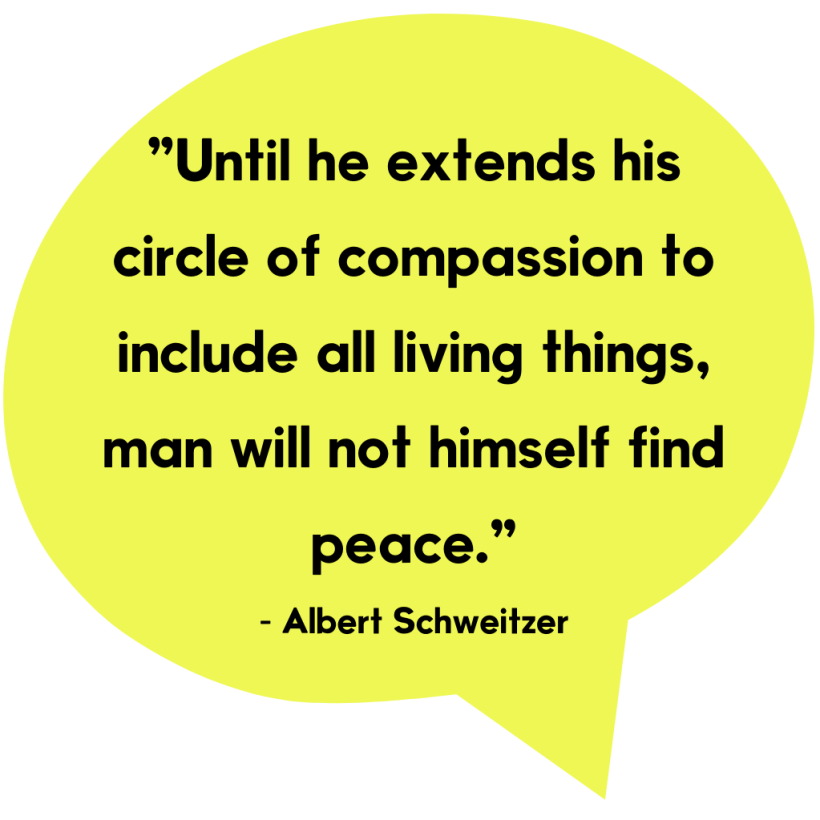
Mother Teresa once said, “Let no one come to you without leaving him better.” What a great reminder, a wonderful intention to set. It’s another way of saying I must learn to keep judgement from my heart and  love my neighbor as myself. Today, I choose to open my eyes, remove them from myself, and focus on others. Albert Schweitzer said, “Until he extends his circle of compassion to include all living things, man will not himself find peace.” I will need to choose this attitude over and over again. Each time that I practice, it will become easier to leave others better after our encounters. I can be a small part of making peace on earth with my own two hands.

“Welcome It All…”

Uncertainty clouds these present days…times unprecedented for many generations. Few of us could have foreseen our entire nation on high alert due to a dangerous new pandemic virus. The citizens of many states have orders to shelter in place, everything from schools to salons to government offices are shut down, and the majority of those who still have employment work from home. It’s easy to see that if nothing else, the economic ripples will be far-reaching. In all likelihood, far more will be affected.

It’s no wonder why the natural response of many is to panic. Reactions range from everything like hoarding toilet paper and Tylenol to becoming agoraphobic. Though I’m feeling increased anxiety these days, I’m also continually reminded, more than anything else, to breathe. Author Brené Brown says that according to her research, the majority of those who live wholeheartedly are “obnoxious breathers.” Though stated comically, I believe it’s true. Regulating our nervous systems often takes so much intentionality that it can come across that way. But the more we can keep ourselves from reacting emotionally, even naturally, in difficult situations by stopping to take a few deep breaths, the better chance we have of responding with equanimity.


In the first episode of her new podcast, “Unlocking Us,” Brené also discusses that when transitioning into difficult new seasons, experienced adults know that as hard as it is, the only way to get to the other side is to push through. As we do this, however, it’s crucial we take the time to name the difficulty of what we’re doing. Only then can we get to the place where we can embrace where we’re at without burying resentment and frustration.


For example, while sheltering in place and working from home, screens seem to await me at every turn. Work requires being on my computer eight hours a day, something my spine finds very difficult. Everything from church to medical visit to most shopping now come online. Connecting socially most often means texting, phoning, or Facebooking. Although I initially felt grateful to have these opportunities, I must admit, I’m finding tele-connecting difficult and far from authentic. 


But on a cool windy day this week, it dawned on me that spring arrived with the equinox earlier this week. The birds arrived weeks ago, baby calves play on a neighboring field, and neither seems to realize we’re in the midst of a pandemic. On a whim, I grabbed my gardening gloves, a spad, a bag of potting soil, and a few plants that needed repotting. We all went out into the sun embracing it along with the bitter wind. I closed my eyes and decided, as Father Thomas Keating once wrote, I would, “Welcome It All:”

“Welcome, welcome, welcome [it all]…I welcome everything that comes my way today because I know it’s for my healing….I let go of my desire to change any situation, condition, person, or myself. I open to the love and presence of God and God’s action within it.”


For an hour or so, I immersed my hands in earthy soil and attempted to give the beautiful living plants I’ve been given more space to stretch their roots and GROW. ITs was a wonderful reminder of BEAUTY and LIFE, a gentle nudge to get off all the screens as much as I can and nurture the things that provide me with sustenance and rest. I love Eugene Peterson’s translation of Matthew 11:28-30 in The Message: “Are you tired? Worn out? Burned out on religion? Come to me. Get away with me and you’ll recover your life. I’ll show you how to take a real rest. Walk with me and work with me—watch how I do it. Learn the unforced rhythms of grace. I won’t lay anything heavy or ill-fitting on you. Keep company with me and you’ll learn to live freely and lightly.”


Jill also sings this invitation in her song, “I AM:” 


“The tide can change so fast, but I will stay the same through past, the same in future, the same today

I am constant, I am near, I am peace that shatters all your secret fears…

Oh weary, tired, and worn, let out your sighs, and drop that heavy load you hold, ’cause mine is light.”

“Your Love Awakens Me…”

I’ve noticed that when I can’t be still, when my OCD tendencies kick in and I’m operating on overdrive when I’m spinning in circles in a wild attempt to fix everything, that I need to stop and pay attention. Something is going on under the surface. Instead of numbing through activity and efforts to keep things under the illusion of control, I must be willing to sit with the discomfort. And this…this is hard.


As author, researcher, and speaker Brené Brown says, we all have ways of numbing. For some, they come in the more blatant form of substance addiction. For most of us, it’s subtler. We escape the pain of conflict, life, or difficult seasons or relationships with Facebook, food, television, or shopping…even cleaning. Not that any of these things are bad. They are all necessary and good in moderation. But the question is…are they bringing us pleasure and rest, or are they deadening our senses so that we feel we can cope?


Although I often retreat to unhealthy spots, God continually calls me out of these places, reminding me, “Come out of hiding, you’re safe here with me…You’ve been on lockdown and I hold the key…..(Steffany Gretzinger & Amanda Cook, Bethel Worship)” He is perpetually opening my eyes to the world around me, helping me learn that it’s connection, not escape, which helps me survive. Brené Brown also states that letting go of numbing and powerlessness is one of the ways we cultivate a resilient spirit and embrace wholehearted living.


This reminds me of what the great poet Rumi said, “Your task is not to seek for love, but to see and find all the barriers within yourself that you have built against it.” It also brings to mind a recent worship song, by Phil Wickham, but also sung by McKenna Sabin, “Your Love Awakens Me,” which states:


“There were walls between us,

By the cross you came and broke them down…

You called me out of the grave. You called me into the light.

You called my name and then my heart came alive.

Your love is greater. Your love is stronger.

Your love awakens, awakens, awakens me.”


It’s a continual process, but I ask that this day, moment by moment, I can allow His love to lead me out of the darkness and into the light, to break every chain, to awaken me. As poet e.e. cummings once wrote,


“I who have died am alive again today…

now the ears of my ears awake and

now the eyes of my eyes are opened.”

Safe Space…

After spending fifteen years in public education, I’ve fielded my share of questions.. Middle and high school students have not yet accepted the status quo and see the world in a different way than adults. Though their questions can be challenging and cause me to reexamine hard issues with a fresh perspective, they also merit an audience, a safe space to be heard.


Those who have helped me in my own journey are those who have been able to sit with me in the times I’ve doubted and questioned. They’ve assured me that I’m seen, that it’s okay to ask, that I serve a God who’s big enough to answer. They’ve also offered their wisdom and ideas, shared their experiences and council, and helped me find answers through study and God’s word.


From Job to the Psalmist to the prophets, God has made space for the doubts and questions of mankind. Jacob wrestled with God. Job asks many questions of God in his suffering, and he was not ignored, “…the LORD answered Job” (Job 38:1). Jesus did the same for those who came to him. From the rich man to the Pharisees to his disciples, he showed each he didn’t fear their questions. His answers often reframed their thinking, but he heard them. Each walked away understood and met in his own place of need. 


Paul and Peter also model this for us in their letters to the early church. It’s obvious they address questions held by various individuals or communities in specific, yet supportive ways. Whether the issues be faith, sin, Spirit-filled living, marriage, or understanding God’s will, they don’t hesitate to seek or explain, or encourage. Questions are not ignored or derailed. Concerns are heard and addressed so that growth can be facilitated. 

 
I Peter 3:15 tells us, “Always be prepared to give an answer to everyone who asks you the reason for the hope that you have. But do this with gentleness and respect….” Peter encourages us not only to be prepared to respond to those who inquire, he encourages civility and reason in our discourse. The council comes from the apostle who continually questioned and even challenged Jesus. But because Jesus met him in his place of need, his story, name, and life changed forever.

“Seeing New Lands, Losing Sight of the Shore…”

In college, I studied and trained to be a social studies educator, then found it difficult to find a position where I wanted to live in rural Colorado. Encountering this temporary career obstacle was one of the best things to ever happen to me. It prompted me to change my course and accept the invitation of a friend to teach English in the interior of the Dominican Republic. Without knowing more than a handful of words in Spanish, I left on a life-changing adventure. As Sheryl Sandberg says, “If you’re offered a seat on a rocket ship, don’t ask what seat. Just get on.” 


The time in the D.R. was simultaneously the most difficult and amazing experience of my life. Not only did I learn a new language, I gained the skills to navigate another culture and forge successful relationships within it. This rich season prompted a love of culture and travel that has shaped my adult years. When I returned to the States a year later, I became a Spanish teacher, a position that provided the opportunity to share this passion with countless students. My students and I often discussed the many benefits of travel..

1. OUR WORLD GROWS EVERMORE CONNECTED WITH EACH PASSING DAY.

The Twenty-First Century world we live in is more connected than at any other previous point in history. Technology, particularly the Internet and SmartPhones, has made this possible. In 1990, the distance between any two people, say strangers meeting in an international airport, was thought to be six people. Today, that distance is shortened to around three people (https://research.fb.com/blog/2016/02/three-and-a-half-degrees-of-separation/). The youth graduating in today’s world will compete for jobs with those from other nations. It is essential those nations are able to communicate with one another and have some level of understanding.

2. TRAVEL OPENS OUR EYES, EARS, AND HEARTS TO THE WORLD.

Through travel, we learn the skills to appreciate, understand, and build relationships with other cultures. Though speaking more than one language is important, even essential, it’s far more crucial that we each have the skills to appreciate, comprehend, and empathize with other value systems and ways of doing things. These skills are key to any type of relationship. 

2. ADVENTURE IS A STRETCHING AND REWARDING EXPERIENCE. 

The thrill of adventure can be uncomfortable, but also freeing. Through it, we are offered growth, learning, new perspectives and vistas, as well as fresh layers of comprehension and enlightenment. A former Harvard president once said, “Consider the turtle, “He doesn’t grow unless he sticks his neck out.” Growth always involves an element of risk, but it comes with infinite possibilities for reward as well. As André Gide once said, “In order to see new lands, one must consent to lose sight of the shore for a very long time.”

Stepping Up…

After almost nine years with chronic illness and pain, I definitely have my days where I get discouraged. I’m beyond thankful I have a body that moves and can do most things for itself, but it takes hours of the day to keep it in that condition. Despite my best efforts to live in health, it often feels as if my body continues to fall apart. In II Corinthians 4:16-17, the Bible says this is no surprise! “…Therefore, we do not lose heart. Though our outer self is wasting away, yet our inner self is being renewed day by day. For our light and momentary affliction is producing for us an eternal glory that is far beyond comparison.…” I love that this passage, full of the seemingly distressing news that our bodies are indeed wasting away, begins with, and “…Therefore, we do not lose heart.” This is also the chapter that tells us, “…but we have this treasure in jars of clay to show that this all-surpassing power is from God and not from us” (II Corinthians 4:7).


Author Roy Lessin writes, “Everything in this world is moving in a downward direction–our bodies are a little older than they were yesterday; the parts in our cars have more wear than they had yesterday; even the earth is aging like a worn garment. In God’s kingdom, things are just the opposite for us. Everything moves in an upward direction-we go from faith to faith, from glory to glory, & from strength to strength. Our characters are being conformed to the image of Jesus, our spiritual lives mature, our love for the Lord deepens, & He becomes more precious with time. Today you can confidently say, ‘It is well with my soul…& it will be even better tomorrow.’ ”


As we journey through this broken world with bodies and spirits that can often feel broken as well, may we be surrounded by the love of friends and family and a company of great hosts that aid us in our voyage.

“Calling All Angels”

by the Wailin’ Jennys

“O Cross that Liftest Up My Head” (George Matheson)…

The final stanza to George Matheson’s hymn “O Love That Will Not Let Me Go” makes clear the calling each follower of Christ is called to:


O Cross that liftest up my head

I do not ask to fly from thee

I lay in dust life’s glory dead

And from the ground there blossoms red

Life that shall ever be.


Our earthly lives can be full of blessing, and simultaneously, full of suffering, marked my wounds and scars we’ve received along the way. The apostle Peter speaks to this in I Peter 4:12: “My dear brothers, do not be surprised at the test you are suffering, as though something unusual was happening to you. Rather, rejoice that you are sharing in the suffering of Christ, so that you may be full of joy when His glory is revealed.”


We share in the suffering of Christ, who suffered all things for us, and we are promised joy as the end result. When Jesus returned to the disciples after the crucifixion and the apostle Thomas doubted his resurrected identity, Jesus told him to feel the wounds in his side and his hands. Jesus offered Thomas total transparency, knowing this apostle would one day be martyred for his efforts to share the gospel in modern day India.


As author Sheila Walsh states in her book It’s Okay Not to Be Okay: Moving Forward One Day At a Time:
“There is no image that displays the love of God more perfectly than the scars of Jesus. The scars tell God’s story. ‘That Sunday evening the disciples were meeting behind locked doors because they were afraid of the Jewish leaders. Suddenly, Jesus was standing there among them! ‘Peace be with you,’ he said. As he spoke, he showed them the wounds in his hands and his side. They were filled with joy when they saw the Lord!’ (John 20:19–20)

But before the joy, there was heartache and questions. Nothing made sense anymore.

We all know we’ll face challenges in life, but sometimes we’re hit by something that feels as if the enemy has won. That’s a frightening place to be. That must have been how the disciples felt that night.

But as the risen Christ held out His nail-pierced hands and wounded side to His friends, they were no longer marks of death, they were signs of victory: declaring that death was overcome by the blood of the Lamb. Christ wears those scars in heaven as glorious trophies of the battle He has won.

The only wound from this earth in eternity will be the scars of Christ (emphasis mine). If Christ has chosen to live eternally with His scars, why would we be ashamed to show ours?

I think that every time God the Father sees the pierced hands and feet of Christ, He sees you and me. The scars tell God’s love story.

The love of God invites us to bring our scars into the light. We don’t have to hide anymore. It really is okay not to be okay.

Our scars are proof that God heals.”

A Spacious Place…

Just now I’m listening to the song of wind chimes blowing in a gentle summer breeze outside my window. Curtains rustle as the light filters in. The dogs sleep in a mix of sun and shade under a tree where apples ripen in preparation for the autumn harvest. I sit at the table with the extraordinary gift before me of a peaceful, quiet time in which to read and reflect and write. As friends begin teaching children for a new school year, a blessing we once shared, I have a whiff of nostalgia, but breath a deep sigh of relief, for I know it had become too much for my fragile body.


A man walks his clomping horse up the dirt road where we live in this one-of-a-kind small mountain town. Though late August, the tundra on the hills has begun to change and the evenings are cooler. I settle into the weekday morning quiet of this world and feel deep gratitude for the season of rest I’ve been granted in this beautiful and spacious place. Studies completed, new paths opened and explored, more adventures and learning await and good work will need to be done. But for now, this day, I rest and give thanks.


Many times this was among the things only hoped for and imagined. That being said, it is important that I remember: my Father God and loving friends generously sacrificed and gave to share this with me. Both have been oh so sweet and faithful. As Psalm 18:16-19 proclaims, “He reached down from on high and took hold of me; He drew me out of deep waters. He rescued me from my powerful enemy, from my foes, who were too strong for me. They confronted me in the day of my disaster, but the LORD was my support. He brought me out into a spacious place; He rescued me because He delighted in me.”
As author Ann Voskamp states, the act of remembering re-members us, helping rejoin the broken pieces. A dear friend reminded me today: there have been miracles…. there will be miracles. It’s good to remember. The chimes sound as the winds stir a song of praise.  

Strong Hands, New Eyes…

Oscar Wilde once said, “It takes great courage to see the world in all its tainted glory, and still to love it.” This truth often strikes me, for, on a daily basis, I am amazed by the beauty and kindness and inspirational perseverance around me. On an equally frequent level, I am confronted with woundedness, ugliness, and hypocrisy. To hold the tension of this world’s  “tainted glory” well takes great balance and skill. Whatever and whoever there may be in my own path, I am quick to judge, to praise or condemn, to choose a personal response that has the potential to fall on either end of the spectrum.


Whether in line at the post office or the supermarket, driving, walking in the beautiful mountain town where I live, or working, I cross paths with many I choose to ignore. How many do I encounter every day who are longing to be seen or heard or helped in some way? Most often, I choose to believe that my schedule is too busy, my hands are too small and weak. I allow my eyes to cloud over and my mind to wander back to its self-preoccupation.


But what if my small hands are strong enough to offer a drink to the thirsty? What if doing so is the water my own soul needs? As David Foster Wallace says in his graduation speech entitled “This Is Water,” “Sometimes the hardest and most important realities are often the hardest to talk about.” In the petty frustrations of day-to-day living with narrow-sighted vision, it is only in choosing to look around with compassion that we find our own paths enlarged.


Just as  Jesus did, we are called, “…to preach good news to the poor…to bind up the brokenhearted…to proclaim freedom for the captives and release from darkness for the prisoners, to proclaim the year of the Lord’s favor…to comfort all who mourn, and provide for those who grieve…to bestow on them a crown of beauty instead of ashes, the oil of gladness instead of mourning, and a garment of praise instead of a spirit of despair” (Isaiah 61:1b-3a). God says that “…if you spend yourselves in behalf of the hungry and satisfy the needs of the oppressed, then your light will rise in the darkness, and your night will become like the noonday” (Isaiah 58:10).


Spanish-speaking artists Marcela Gándara and Jesus Adrian Romero have a beautiful song entitled “Dame Tus Ojos” (“Give Me Your Eyes”). In the song, they ask God, “Give me your eyes I want to see. Give me your words, I want to speak.” The song is a petition to be filled with the Spirit of God in every step. As we become Christ’s body and His church, may we literally be His hands and feet, see with His eyes, love with His heart.

***Photo Credits: Brainy Quote