Blog

“Looking for An Answer to a Question I Can’t Name”

I learned a long time ago to stop asking questions of others if I don’t want to hear their answers. At least that’s the case most of the time, with most people. It’s definitely a different story when it comes to God; despite my best efforts to predict and control my circumstances, He always seems to answer in the most unexpected ways. Sometimes His responses takes my breath away with how wondrous they are; others, they can stop me in my tracks with how much they seem to wound. He’s hard for us all to comprehend. Mostly, it seems my questions have to do with the problem of pain, essentially asking why I and others must suffer. Christian apologist Ravi Zacharias points out that only a Western worldview would allow this question. Isn’t it funny that we frequently question why we deserve to suffer, but rarely consider why a just God has freely given us so much love and grace and beauty?


Just maybe, I’m trying to reconcile the irreconcilable. Still, I can’t seem to stop wondering why things happen as they do. Why are we all living our lives as if we’re trying to tip the scales in our favor, when we have to know that’s not the way it works? Maybe, as Norah Jones sang, “I’m looking for an answer to a question I can’t name”. Author Marilynne Robinson reflects on this too:


“Things happen for reasons that are hidden from us, utterly hidden for as long as we think they must proceed from what has come before, our guilt or our deserving, rather than coming to us from a future that God in his freedom offers to us… My meaning here is that you really can’t account for what happens by what has happened in the past, as you understand it anyway, which may be very different from the past itself. If there is such a thing….Of course misfortunes have opened the way to blessings you would never have thought to hope for, that you would not have been ready to understand as blessings if they had come to you in your youth, when you were uninjured, innocent. The future always finds us changed. So then it is part of the providence of God, as I see it, that blessing or happiness can have very different meanings from one time to another. This is not to say that joy is a compensation for loss, but that each of them, joy and loss, exists in its own right and must be recognized for what it is. Sorrow is very real, and loss feels very final to us. Life on earth is difficult and grave, and marvelous. Our experience is fragmentary. Its parts don’t add up. They don’t even belong in the same calculation. Nothing makes sense until we understand that experience does not accumulate like money, or memory, or like years and frailties. Instead it is presented to us by a God who is not under any obligation to the past except in His eternal, freely given constancy. Because I don’t mean to suggest that experience is random or accidental, you see. When I say that much the greater part of our existence is unknowable by us because it rests with God, who is unknowable, I acknowledge His grace in allowing us to feel that we know any slightest part of it” (Lila, Farrar, Straus and Giroux; pp. 222-223).


Perhaps it’s natural I don’t understand God’s working, when there’s so much about Him that simply can’t be known yet, and so much of what we do know defies understanding. I’m a spectator in a parade, and He’s the grand marshal, looking at His creation from a view up above. As C.S. Lewis says of his character Aslan, and in so doing describes and untamable God: “Who said anything about safe? ‘Course he isn’t safe. But he’s good. He’s the King, I tell you.”  Who could worship a god that was at our level, that didn’t defy our logic? What can we do but stand in awe? As Chris Tomlin sings, it’s good He’s “Indescribable”:

“Indescribable, uncontainable,

You placed the stars in the sky and You know them by name.

You are amazing God

All powerful, untamable,

Awestruck we fall to our knees as we humbly proclaim

You are amazing God”.

Anchored in the His Harvest…

A friend of mine was once  given a vision and a strong mental picture of harvesting. She saw a girl walking through a corn field, ripe for harvest. As the girl walked, the storm winds blew & endangered all that had grown. As she faced the storm, she carried a large anchor, & began to cast it against the wind, into the harvest field. Again & again, as the storms buffeted all that had been produced by hard labor & careful care, the girl made this choice. Again & again, she threw her anchor into the harvest.


It reminds me of Bebo Norman’s song entitled “All That I Have Sown”, which describes what ultimately comes of each of our lives:


And all that grows is our story told

As life unfolds here before

The peace we found in that broken ground

I can see them in the harvest…of all that I have sown

And when my life is done

I pray the kingdom come

And take me to Glory

It’s living inside me

It was planted like a seed

All to tell a story
It’s “all to tell a story”. The tasks given to each of us may require a hard, committed constant endeavor, and at times, can feel very lonely. We must encourage each other to take heart, and together, courageously cast out our anchors over and over again. Matthew tells us that Jesus said, “The harvest is plentiful, but the workers are few. Pray therefore that the Lord will send out workers into His harvest field.” Even prayer may feel like a long labor, and trusting the season of harvest awaits us may require immense faith; we are only capable of this great work as we are filled with God’s strength. As we anchor ourselves in a harvest that is most often unseen, truly, we anchor ourselves in Him. In Him is “all our hope & stay” (On Christ the Solid Rock I Stand).

“O Joy that Seekest Me Through Pain” (George Matheson)-

One of my favorite sights in Barcelona is the artist Antoni Gaudi’s Parque Güell, where mosaic tiles cover the longest bench in the world. There’s something so beautiful about mosaics, isn’t there? They strike something within us not only for the picture they create with complementary colors, but also for the stunning revelation of patterns and colors one wouldn’t think of as naturally belonging together. They are all simply pieces of vessels and structures that have been broken and neglected, whose original purpose seemed to lie torn in worn-out pieces. They highlight the beauty of fractured things coming together to create something new, something unexpected. When this happen in my life, as in this present season of reinvention, the new and ultimate picture being made by God is often a mystery. C.S. Lewis spoke of God as being the master artist in our lives:

“Remember He is the artist and you are only the picture. You can’t see it. So quietly submit to be painted—i.e., keep fulfilling all the obvious duties of your station (you really know quite well enough what they are!), asking forgiveness for each failure and then leaving it alone. You are in the right way. Walk—don’t keep on looking at it.”

When I do catch a glimpse of God’s vision for what seemed fragmented and lost, it often takes my breath away. Submitting to His artistry, and to this mystery, ultimately seems to bring a surprising joy that can’t be ignored. Pastor and hymn writer George Matheson spoke of this too:

“O joy that seekest me through pain,

I dare not close my heart to thee.

I trace the rainbow through the rain,

And know the promise is not vain,

That morn shall tearless be.”

The Apostle Paul’s encouragement in Romans 8:28 is so comforting: “And we know in all things, God works for the good of those who love Him, of those who are called according to His purpose”. One day will see the grand design: “Then I will know, even as [we] are fully known” (I Corinthians 13:12). That day will not only hold the revealing of His artistic design, it will be the completion of all our joyous victories, manifested in all their fullness.

The Song of the Meadowlark & The Coming of Spring…

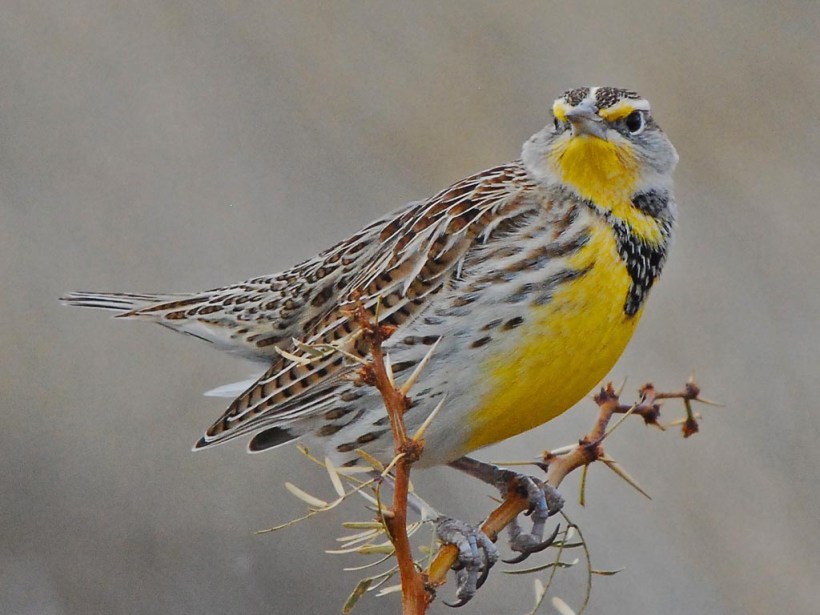
In Colorado, it’s definitely hard to predict when spring has actually arrived. Skies are typically as consistently gray as ever are, and spring blizzards and dust storms frequent. It’s mid-April now, and for a couple weeks, I’ve been hearing the song of the meadowlark, my favorite of all birds. There’s something about this bird’s song in particular that signifies the arrival of spring here. Now the daffodils are blooming, and I’m sure that spring is on the way. Oh, how wondrous it always is. Sometimes in the fall, I almost welcome the shorter days and quieter season, bringing with them a chance to turn inward. Despite holding a definite appreciation for each season, however, it does seem winter always leaves its mark. The coming of spring is always so welcome. Margaret Manning, an author and speaker for Ravi Zacharias ministries, reflects on the arrival of spring and Easter:

Even as Christian mourning turns to joy with Easter resurrection celebrations, it is important to note that Jesus bore the wounds of violence and oppression in his body—even after his resurrection. When he appeared to his disciples, according to John’s gospel, Jesus showed them “both his hands and his side” as a means by which to identify himself to them. Indeed, the text tells us that once the disciples took in these visible wounds “they rejoiced when they saw the Lord” (John 20:20).

The resurrection body of Jesus contained the scars from nail and sword, and these scars identified Jesus to his followers. And yet, the wounds of Jesus took on new significance in light of his resurrection. While still reminders of the violence of crucifixion his wound-marked resurrection body demonstrates God’s power over evil and death.

But his wounds reveal something else. God’s work of resurrection—indeed of new creation—begins in our wounded world. His resurrection is not a disembodied spiritual reality for life after the grave; it bears the marks of his wounded life here and now, yet with new significance.

One of the best parts of spring and Easter, it seems, is the joy we find in the perspective we have in them…perspective that is often wrought from the suffering and scars gained in winter-likes seasons in our lives. Bess Streeter Aldrich, a fiction author who wrote primarily in the the 1920’s, has a novel called Spring Comes On Forever. It’s a beautifully told story, but it’s the title itself to which I’d like to call attention. The wonder of spring is that we can enter into it fully, in all its presence and glory, and yet simultaneously receive the promise that it is always still coming, still waiting. May we never lose our sense of wonder in both realities!

On Waiting…

Though most of us live our lives “on the go”, and many of us will travel far, the place we’ll spend perhaps more time in than any other is  in life’s waiting room. Even Dr. Seuss recognizes this in his classic children’s story Oh, The Places You’ll Go: “Waiting for a train to go or a bus to come, or a plan to go or the mail to come, or the rain to go or the phone to ring, or the snow to snow or waiting around for a ‘Yes’ or ‘No’, or waiting for their hair to grow. Everyone is just waiting.” It’s as if he’s pointing it out to both the child and the adult that waiting is a necessary component of any voyage.


Many of us feel we’ve spent a great deal of our lives waiting on God. Our petitions are many, our prayers may even be incessant, but God often seems slow to answer. One possible reason for this is God’s view of time, as the apostle Peter observes:

‘But do not forget this one thing, dear friends: With the Lord a day is like a thousand years, and a thousand years are like a day. The Lord is not slow in keeping his promise, as some understand slowness. He is patient with you, not wanting anyone to perish, but everyone to come to repentance.’

This same passage points out that though God may require us to be patient, we are the true beneficiaries of patience. Through waiting and hoping, we learn not just to lay our requests before the Father, but also to converse with Him, learning to trust that He will always faithfully respond, and always answer in a way that yields “the best possible results, for the most possible people, at the best possible time” (Chip Ingram). Eugene Peterson once summarized, “Waiting does not diminish us, any more than waiting diminishes a pregnant mother. We are enlarged in the waiting. We, of course, don’t see what is enlarging us. But the longer we wait, the larger we become, and the more joyful our expectancy.”

Living in a House Called “Enough”…

From the day of my birth until today, there isn’t one I have survived without grace. Despite my doubts and regrets, that grace has always been enough. My needs have been met, and often in ways I could never have envisioned. It’s as if someone saw my future, and stockpiled exactly the provisions I would need along the way. Someone did. As unchanging as I may be, God never wavers. Worry hasn’t changed one bit of His gracious provision. Considering the reality of His providence and provenance, why is it I spend most of life ruminating over thoughts full of worry? Will there be sufficient companionship, happiness, or strength, or time, or wisdom? Though His grace has always proved sufficient, it seems I’m always fretting He won’t be enough.
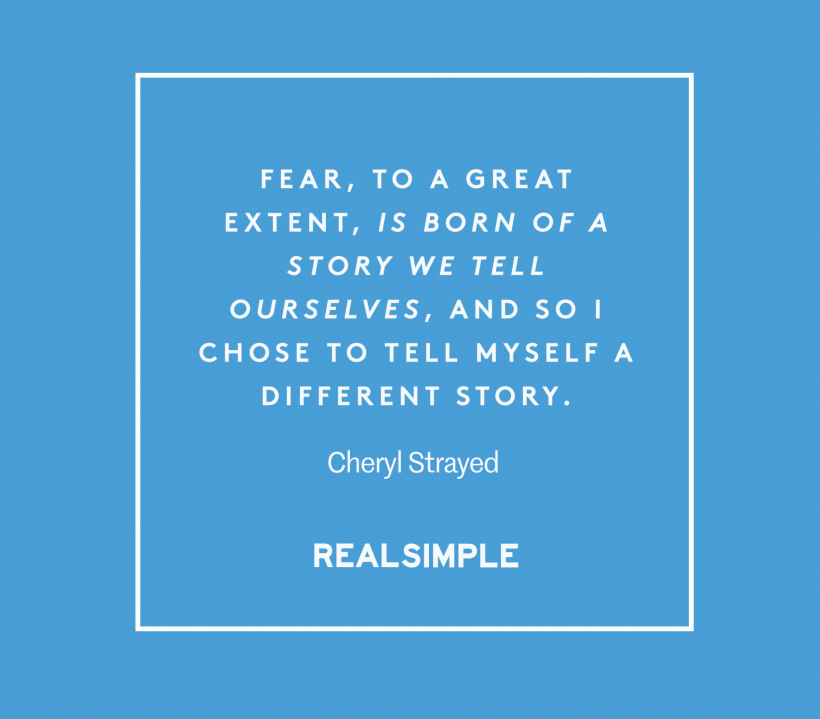
Often I think God is asking me about that very thing: Just when will all He’s given fill my bottomless well? Just when will I let Him be enough?  He’s never ever failed me. If fear, as someone said, is a result of imagining the future without God in it, then why, oh why, am I so afraid? I want to learn to dwell in a land called enough…to live in it and make my home there. I’m determined to learn to give to others from that place of enough, knowing in the depths of my soul there’s an inexhaustible supply. To find that place, I must choose to make it my destination, to gratefully acknowledge each grace, to constantly hear the voice that beckons over any calm or storm: “I am enough. I will be enough.” As Cheryl Strayed said, I too proclaim: “Fear to a great extent, is born of a story we tell ourselves, and so I choose to tell myself a different story.”

“Bread & Roses”…

The early 1900’s saw many labor strikes in America in the effort to attain better working conditions, particularly in industrial manufacturing. It was perfectly common for men, women and children to spend their lives working ten-twelve hour days, seven days a week. In textile mills of the day, as well as the carpet factories of places such as India today, children are especially prized as laborers for their small hands and ability to work the looms. One of the most famous strikes took place in Lawrence, Massachusetts in 1912. Working conditions were deplorable, and citizens of fifty-two different nations were living within a nine-mile radius of the mill. When the mill randomly cut the weekly pay by thirty-two cents, somewhere around 30,000 workers protested for over nine weeks, using the opportunity for their union to fight for a reduction in the work hours for women and children from twelve to ten hours daily (http://www.history.com/news/the-strike-that-shook-america-100-years-ago). The mill staunchly refused any compromise, and the battle raged on. It came to be known as one that shook America, and most famously, as the “Bread and Roses” strike, for the song the payless workers would sing as they came to protest each day (James Oppenheim).

As we go marching, marching

In the beauty of the day

A million darkened kitchens

A thousand mill lofts grey

Are touched with all the radiance

That a sudden sun discloses

For the people hear us singing

Bread and roses, bread and roses

As we go marching, marching

We battle too for men

For they are women’s children

And we mother them again

Our lives shall not be sweated

From birth until life closes

Hearts starve as well as bodies

Give us bread, but give us roses

It’s words always give me chills. It wasn’t until the U.S. federal government became involved that the union demands were met, but the victory was for many workers yet to come, and it served to awaken America’s social consciousness. This song is so essential historically, but also so meaning to me personally. It touches on the need for beauty in our lives. Work is a blessing in so many ways, and can bring a sense of purpose and connection. We must also cultivate our awareness and attention to the beauty in our lives. There’s always more present than we can conceive, always enough to feed our souls. “Our lives will not be sweated from birth until life closes. Hearts starve as well as bodies; give us bread, but give us roses.”

Stepping Up…(From the Night of the Buffalo)

For the past several years, since before my twenty-ninth birthday,  I’ve woken up each morning feeling like I’ve been hit by a truck. More accurately, as if that buffalo hit me. Yes…a buffalo, though technically, it was a North-American bison. In opening my eyes to face a new day, in the blink of an eye, I can see the night my dog and I collided with him. The car lights shining on a dark night on the Colorado highway failed to warn us of his shadow standing in the road. We certainly woke him up from a nap, but he crawled off the car and stumbled back into the road behind us to stand again. That buffalo took several years to make me feel the impact of its collision, but I definitely feel it now. I’m lucky: we collided, but nothing shattered, no one died. There’s no question we were protected. It’s really a miracle, but indeed, a miracle that changed everything. Leif Enger wrote, “People fear miracles because they fear being changed-though ignoring them will change you also.” Had I known it was coming, I’m sure I would have been afraid. Now, I pray it has changed me, molded me, transformed me. Now, I fear most ignoring the miraculous in it all.


In his powerful Superpower poem, Steve Gross wrote, “it takes practice…to get beyond the whole half-full, half-empty question, and just be grateful for the glass.” I  hope I’ll practice, hope I’ll cultivate that gratitude for the glass I’ve been given. Though I’ve yet to meet another who has shared the experience of hitting a buffalo, I’m definitely not the only one to battle illness, or to spend her life fighting the gravity of life and the depravity of man. As I get moving, get stretching, and receive  the warmth of a hot shower each day, I can feel my broken back begin to hold itself upright again. My muscles and joints begin to move more easily, the head clears, and for the rest of the day, I have the ability to move and walk and live well. Many would give anything just to have two legs that can walk.  I may have to work pretty hard at making this body functional, but if I do, it functions. Many would give anything to have a body responsive to their cues and efforts.  Sure, there’s pain, but I’ve been provided with so many tools, so many gifts, so many friends who love and support me. Mostly, it’s easy to get discouraged when encountering the ways pain has changed me, and resisting the limits it has placed on my life. Again, the choice is presented each day. Albert Einstein once prompted us to choose well: “There are two ways in which you can live: you can live as if nothing is a miracle, or as if everything is a miracle.” I can be grateful and work hard, or I can let pain filter my existence and illness the condition that defines me.  Will I choose to awaken to limitation, or to live unlimited? All I must do to maintain a sense of wonder is receive the mercies offered anew every morning.


Most days, with the difficulty of just putting one foot in front of another, it does seem simplest to quit: to stop trying so hard and just let it all take its natural course. If I make that choice, things quickly degenerate. My body can’t get enough of the drug of rest.  If I am to live in hope, I must cling to God’s promises. There is no experience wasted and no downward spiral that can separate us from the His love, even those that are self-generated. ALL is being worked for good. The good work that He began, He will complete. Author Roy Lessin affirms this so well, expounding on the reality of God’s Kingdom. It’s  a wonderful point:

“Everything in this world is moving in a downward direction-our bodies are a little older than they were yesterday; the parts in our cars have more wear than they had yesterday; even the earth is aging like a worn garment. In God’s kingdom, things are just the opposite for us. Everything moves in an upward direction-we go from faith to faith, from glory to glory, and from strength to strength. Our characters are being conformed to the image of Jesus, our spiritual lives mature, our love for the Lord deepens, and He becomes more precious with time. Today you can confidently say, ‘It is well with my soul…and it will be even better tomorrow.”

This is the hope of our journey in stepping Heavenward, in stepping up.

Grace…

Grace…what a beautiful word! Which one of hasn’t longed to find a way to redeem our mistakes, to have an encounter that would make us whole, to accept light and love for ourselves, and to extend this full life to others? Merriam-Webster defines grace as: unmerited divine assistance given humans for their regeneration or sanctification; a virtue coming from God; a state of sanctification enjoyed through divine assistance.” Sometimes it’s so hard to extend grace to others; mostly, it seems insurmountable to really accept it for ourselves. I think this is why the Apostle Paul said it over and over in his letters: “Grace and peace to you through Christ.” It takes many experiences to show us our need, many reminders it is ours for the taking, many encounters to truly transform. Although it’s freely offered, it wasn’t cheap, for it was purchased for us through the precious blood of Christ. It waits for us always, needs only be accepted, is relentless in its pursuit, and brings us true and lasting peace,. Ann Voskamp says it this way: “Grace is like the wind. It finds us as we are, but it does not leave us as we have been….ALL is grace.” All is grace.


If we can remain open enough to receive the unmerited favor that always awaits us, then perhaps our experiences will ultimately be woven into something beautiful? If we long to redo different steps in our journeys, then perhaps we’ve ventured out enough to risk mistakes, and to know the value of forgiveness? Grace involves acceptance of the beauty of what IS, but it also entails the willingness to risk. As André Gide once said, “One cannot see new lands, unless he is prepared to lose sight of the shore for a very long time.” To truly find the wind in our sails, we might indeed lose sight of the shore, but we can never escape the endless ocean of God’s gracious love.

“Maybe wholeness is not reaching for perfection in your life; maybe wholeness is embracing brokenness as part of your life….Maybe life always tastes a bit like regret. Whatever you do or don’t do, there is no way to never taste it. And though you may have to taste regret, you don’t have to believe in it, you don’t have to live in it, like rowing a boat that only goes backward, trying to find something that’s been washed out to sea. It’s god’s sea. And that means all is grace” (The Broken Way, Ann Voskamp).

A good friend…a fellow teacher and blogger, a beautiful woman and mom, in trysting with her pen, reflected:

Because I’m not

what i could be

or should be

i will remember

you need that

also from me

knowing i fail

at loving you

perfectly

and yet everything

is beautiful

as it is

“Amen, Come Lord Jesus”…

I long for the day when the Lord will come. As the old hymn says, “What a day that will be, when my Jesus comes for me, when I look upon His face, the one who saved me by His grace, when He takes me by the hand, and leads me to the promised land. What a day, glorious day, that will be!”  Many time in this valley of shadows, I can see God’s hand. Others, I must find it enough to trust His heart. Yet there are also those days, or even seasons, when it seems my faith is spent, and I look in vain for the development of the fruits of His Spirit at work within me. His love, joy, peace, patience, kindness, faithfulness, gentleness and self-control seem sadly lacking from my life, and from the lives of those around me. Though I physically and mentally and emotionally fail every day, I am assured in Philippians 1:6  that “He who began a good work in me, will be faithful to complete it.” Keith Green had a beautiful song about this journey of faith, proclaiming the Lord’s ability to soften the hardest of places in our hearts:


My eyes are dry

My faith is old

My heart is hard

My prayers are cold

And I know how I ought to be

Alive to You and dead to me

But what can be done

For an old heart like mine?

Soften it up

With oil and wine

The oil is You, Your Spirit of love

Please wash me anew

With the wine of Your Blood

 
The psalmist also acknowledged: “MY flesh and MY heart MAY fail, but God is the strength of my heart, and my portion forever” (Psalm 63:7, emphasis mine). Come do your work Father; be to me now and always what you are, and every will be!  As Revelations proclaims, “Amen, come Lord Jesus.”